

Stop Losing Eyeglass Sales
Adapt or become obsolete.
Adapt or become obsolete. In a world dominated by e-commerce, your optical department isn’t about frames. It’s about delivering an experience patients cannot get online.
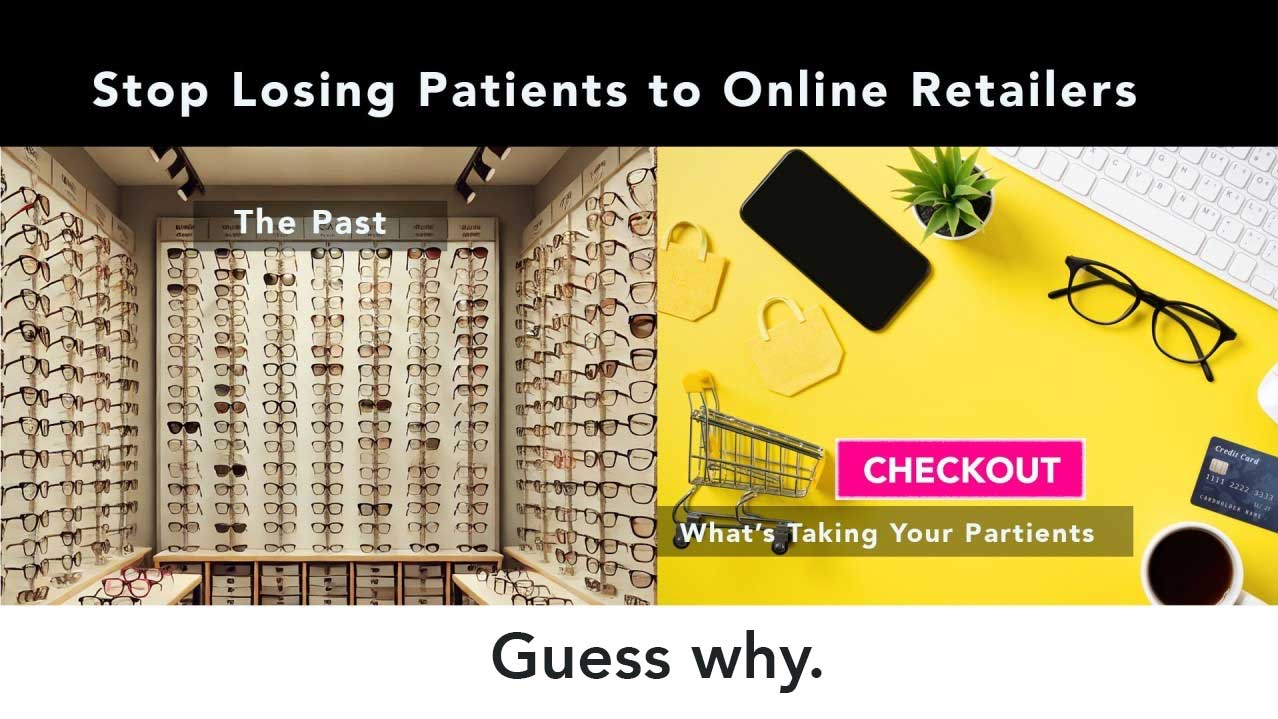
Online retailers didn’t win because they sell glasses cheaper. They won because they removed friction, clarified decisions, and made buying feel modern. Independent practices that continue to treat optical as an afterthought are slowly training patients to leave.
By the Numbers
- The global eyewear market is projected to reach $197.2 billion by 2027, with e-commerce accounting for 24% of sales. (Allied Market Research)
- 67% of patients who leave without purchasing glasses say pricing felt too high, often influenced by how the dispensary looks and what’s presented. (Vision Council)
- The average eyewear capture rate in optometric practices is only 40–50%, meaning half of patients take their prescriptions elsewhere. (Jobson Research)
- Engaged customers are 23% more likely to purchase and remain loyal, especially when the brand feels personal. (Gallup)
These numbers don’t point to a pricing problem. They point to an engagement problem.
Why Patients Leave After the Exam
Eye care professionals often ask why patients walk out without buying glasses. The uncomfortable truth is this: the exam rarely loses the sale — the optical experience does.
Patients don’t leave because they don’t need glasses. They leave because the dispensary doesn’t feel compelling enough to justify staying. Online retailers and big chains don’t always feel cheaper — they feel easier, clearer, and more confident.
If you want optical to be a profit center instead of a leak, you must rethink how patients are engaged and what you’re actually selling them.
From “Optician” to “Eyewear Fashion Consultant”
Titles shape expectations.
The word optician implies a technical, medical role. Accuracy and expertise matter, but that title doesn’t reflect what today’s eyewear buyer wants. Patients are no longer shopping strictly for vision correction — they’re shopping for identity, confidence, and style.
Now imagine the difference when someone introduces themselves as an Eyewear Fashion Consultant.
That single shift reframes the interaction. It moves the conversation away from lenses and toward personal style. Eyewear becomes expressive, not transactional.
Attire reinforces this. Scrubs signal medicine. In the optical department, they quietly work against you. Eyewear is a fashion accessory. There’s a reason luxury brands put their names on temples — not because the optics are better, but because the perception is.
Selling Is Engagement — Not Pressure
Patients hate pressure. They don’t hate selling — they hate uncertainty.
Selling eyewear isn’t about pushing frames. It’s about guiding patients toward clarity. The most effective selling doesn’t happen in optical at all — it starts in the exam room.
Lifestyle questions matter: work environment, screen use, hobbies, and how they want to look and be perceived. When those conversations happen during the exam, optical becomes the natural next step, not a hard handoff. Patients arrive curious instead of defensive.
Training Must Go Beyond Lenses
Optical teams are often trained thoroughly on lenses and insurance, but barely trained on fashion, materials, and storytelling.
That’s a problem.
Today’s eyewear consumer expects guidance that goes beyond function: why acetate matters, why fit matters, why one shape elevates a face while another cheapens it, and why craftsmanship matters more than logos.
Calling everything “plastic” immediately devalues the product. Talking only about designer names often pushes patients toward brands they can buy online. Knowledge builds confidence — and confidence keeps patients from leaving.
Tell Brand Stories
And the Best One Is Yours
Patients don’t just buy glasses. They buy stories.
Design inspiration. Craftsmanship. Intent. Sustainability. Exclusivity. Consumer testing consistently shows these narratives influence purchase decisions — even when people claim they don’t care.
This is where private-label eyewear becomes a massive advantage. Instead of relying on generic brand talking points, you control the narrative.
That final line does heavy lifting. Exclusivity slows the impulse to leave.
Make Optical Interesting Again
Shopping for glasses shouldn’t feel like a chore — but in many practices, it does.
Small changes make a big difference: mirror moments (proper lighting, intentional silence, and confident feedback), virtual try-on tools, and social proof using real patients — not stock runway models.
When patients see themselves reflected in the brand, trust increases.
Turn Patients Into the Brand
One of the most effective engagement tools is also one of the simplest: feature your patients.
Professional, artsy photos of real patients wearing their glasses can be displayed as artwork in the office, on your website, and on social media. During the exam, the doctor can casually plant the seed:
It flatters the ego, personalizes the experience, and keeps patients browsing longer.
Notice how online brands don’t use runway models. They use everyday people. That’s not accidental. Main Street beats Milan.
The Morton’s Steakhouse Effect
Why are people willing to pay significantly more for a steak at Morton’s than at a casual chain?
It’s not the food. It’s the experience.
Service. Ambiance. Intentionality. Scarcity.
Your optical department works the same way. If the environment feels premium and curated, patients understand the value. If it feels dated, cluttered, or careless, they assume pricing is unjustified — no matter how good the product is.
Experience creates value.
The Final Compliment Matters
When a patient is close, the right words can close the loop:
- “These frames are exactly you — confident, polished, and not something you’ll see everywhere.”
- “This shape elevates your entire look. You’ll get compliments constantly.”
Is it flattering? Yes. Is it manipulative? No. It’s reassurance — and reassurance sells.
The Engagement Formula
1) Welcome with intention. 2) Ask meaningful questions. 3) Tell compelling stories. 4) Close with confidence.
A Final Call to Action
If patients aren’t buying glasses, it’s not because they don’t need them. It’s because the experience isn’t compelling enough to keep them.
You’re not losing to price. You’re losing to engagement.
In the exam room, you’re a doctor. In the dispensary, you’re a retailer.
Experience wins. The only question is: are you ready to elevate yours?