

The Designer Frame Trap
How a strategy that once saved optical is now quietly hurting independents.
Let me be clear. I’m not here to bash designer eyewear.
I’ve been in this industry since 1973. I watched designer brands revive frame sales when contact lenses threatened to wipe them out. They brought fashion, excitement, and higher price points into dispensaries that needed them.
Designer brands served a purpose. They still do. Some patients will always want them.
But after more than 50 years in this business, it’s time to ask a harder question:
At what cost?
Before Designer Frames, There Were Factory Brands
In the early 1970s, most frames sold in the U.S. were made in America. They carried factory brand names, not fashion labels. They weren’t flashy — but they were built to last.
Then contact lenses surged. The industry panicked. The solution was simple and effective: turn frames into fashion.
Designer branding worked. For a while.
We Stayed Too Long at the Party
The strategy wasn’t the problem. Staying too long was.
More and more “designer” labels flooded the market — many with no real relevance to eyewear. Licensing fees climbed. Costs ballooned. And independents quietly lost leverage.
Eventually, it became theatre. When the lights came up, practices were left with overpriced inventory, shrinking margins, and patients buying elsewhere.
The Same Brands, Everywhere
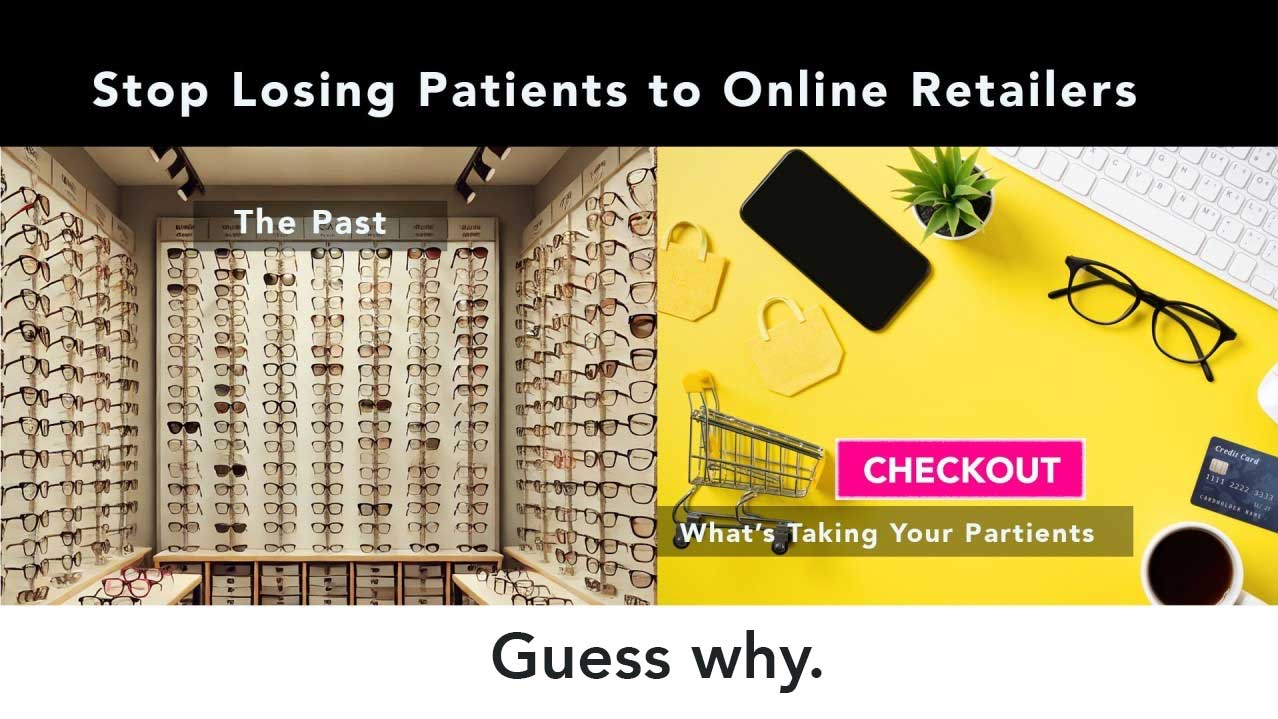
Patients now see the same designer frames on Amazon, at LensCrafters, Costco, Walmart, online ads, and warehouse clubs.
When your dispensary looks like everyone else’s, the patient walks.
The Uncomfortable Truth
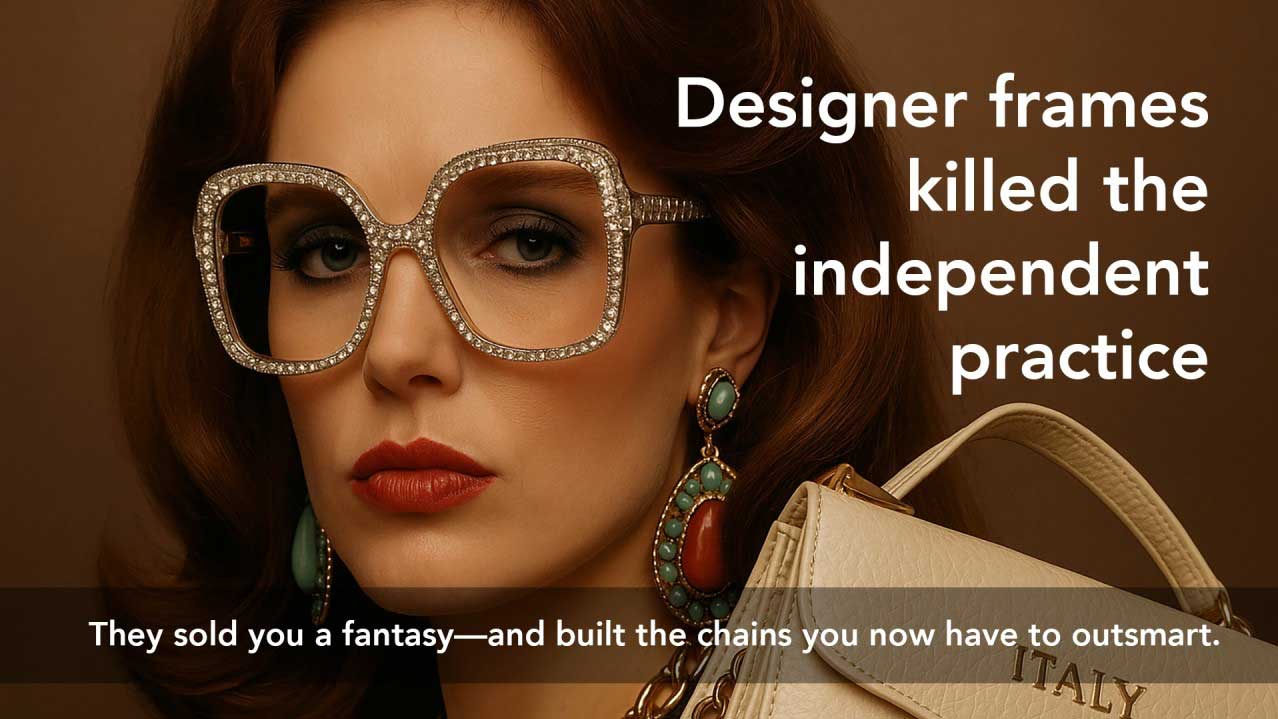
Most designer frames today are made in China — even the ones wrapped in European mystique.
You didn’t pay for better frames. You paid for the name.
And while independents paid for that name, competitors built their own — without paying for it.
Designer Brands Aren’t the Problem. Dependency Is.
You don’t own the label. You don’t control pricing. You don’t control distribution.
When your dispensary looks identical to your competitor’s, loyalty disappears.
Private Label Is a Strategy
Designer brands still belong on the board — they just shouldn’t define it.
Your practice should. Your story should. Your brand should.
Private-label frames aren’t price-compared online, can’t be bought down the street, and deliver higher margins and higher capture when presented correctly.
Final Thought
I’ve watched too many good ECPs lose control of their frame boards — and their patients — by relying too heavily on someone else’s name.
Before you restock the same brands your patients can find anywhere else, ask yourself:
Whose business are you really building?